 INR
INR  (USD $)
 (EUR €)

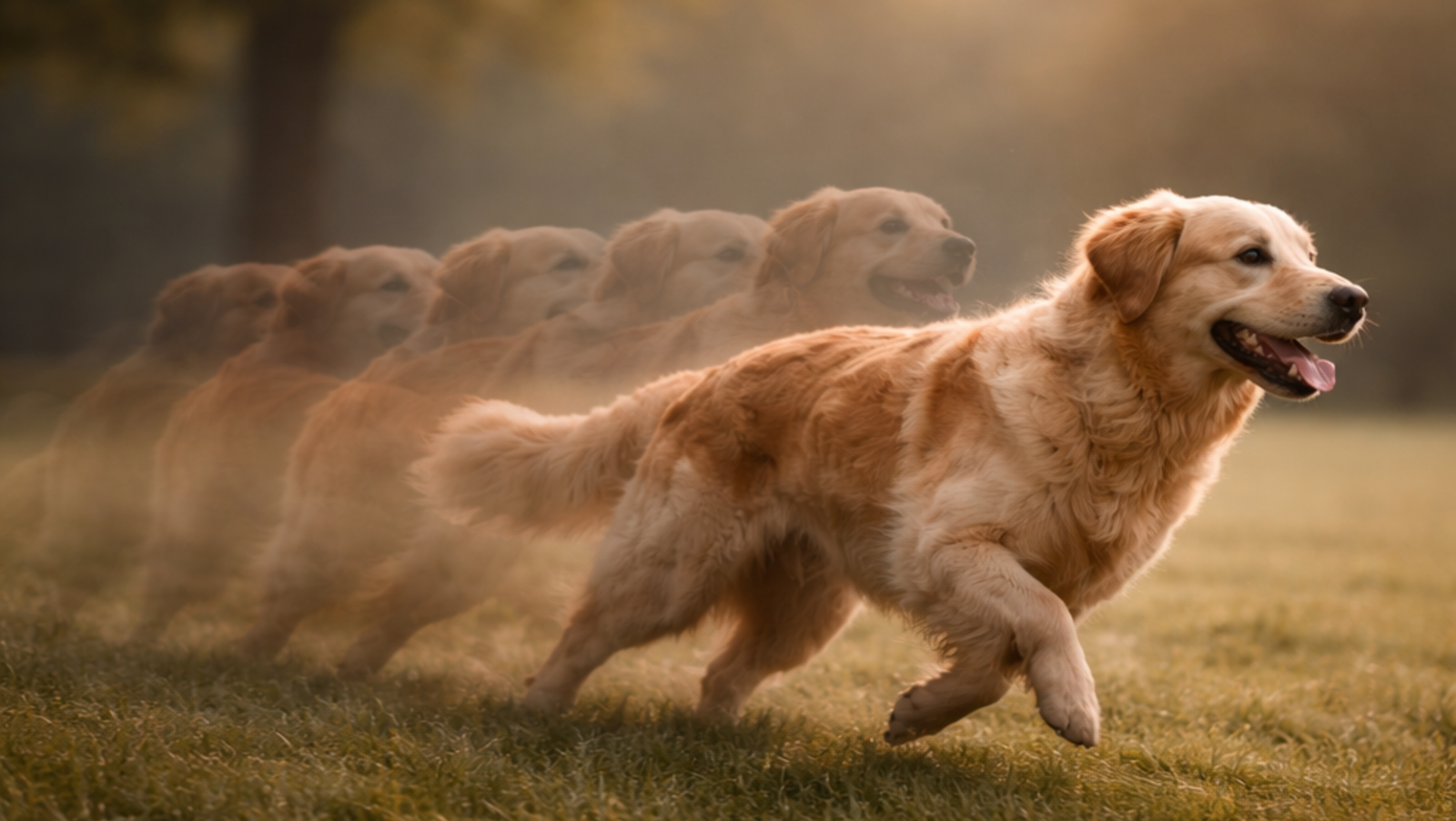
” Biological pace, recovery limitations, and cumulative structural decline in canine, feline, and equine skin. “
You’ve heard it before. One dog year equals seven human years. It’s repeated often enough to feel accurate. It isn’t.
Age does not scale linearly across species. Growth, maturity, and decline occur in phases that do not align proportionally. What differs more fundamentally is not time itself, but how quickly biological systems move through it.
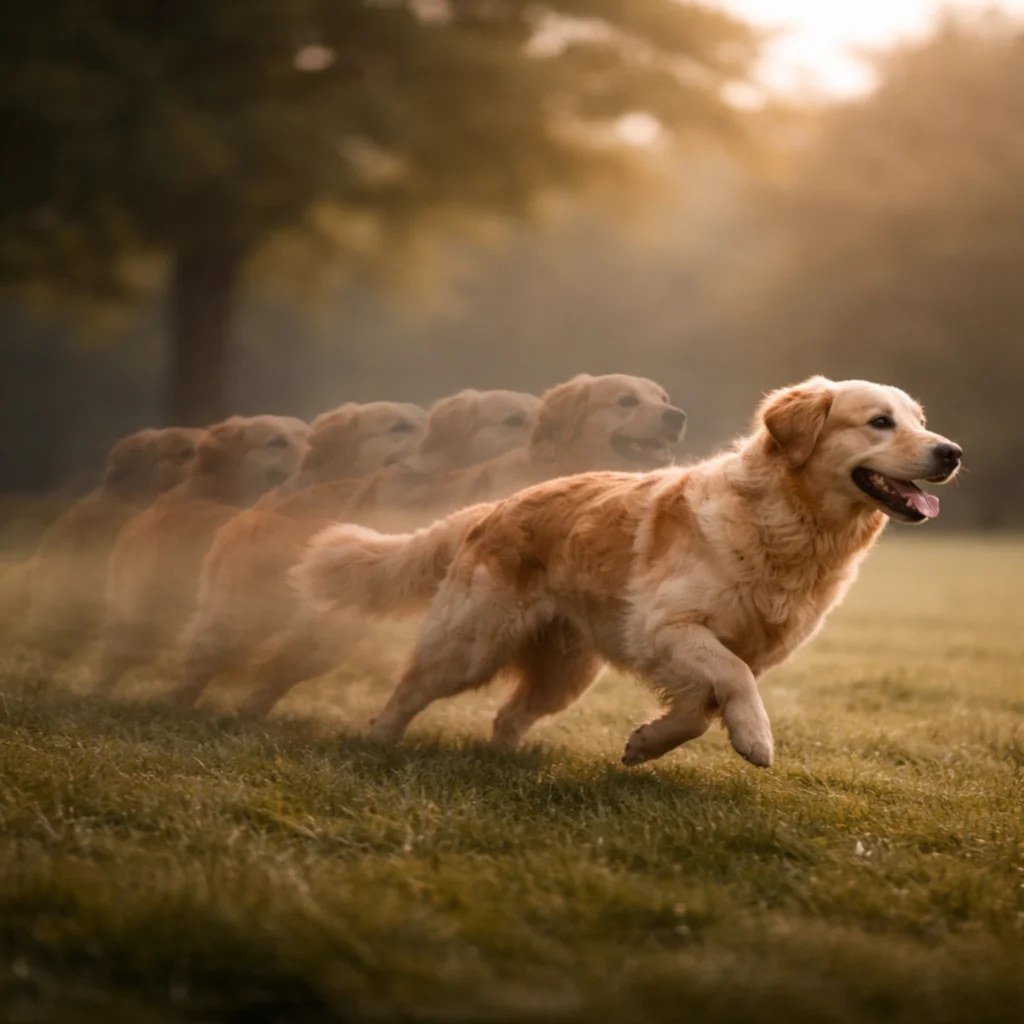
Pets operate at a faster biological pace. Cell turnover is quicker. Metabolic activity is higher. Cycles complete sooner. At a surface level, this appears efficient. In practice, it changes something more important. It reduces the time available for recovery. At the cellular level, this pace has limits. Each time a cell divides, telomeres shorten. These structures determine how long cells can continue to renew effectively.
In humans, this process unfolds over a longer cycle. In pets, the interval is shorter, and the next cycle begins before the previous one has fully stabilised. They move through biological cycles faster than humans, with less time to restore equilibrium between them.

Higher metabolic activity also produces greater oxidative byproducts. These are a normal outcome of energy production, but over time, they contribute to cumulative cellular stress. The system continues to manage this, but the load remains higher.
This is where divergence begins.
Environmental exposure also contributes to this shift. In urban settings such as Mumbai, Delhi, Bangalore, Pune, and similar Tier 1 cities, pets are subject to repeated low-grade stress. Pollution, humidity fluctuations, and controlled indoor environments can influence how skin responds over time.
Routine care compounds this effect. Over-cleansing removes surface lipids and introduces a temporary imbalance that must be resolved. The assumption is that skin returns to its original state. In many cases, it may not fully do so. Each cycle can begin from a slightly altered baseline. Over time, resilience declines.
The system becomes easier to disrupt and slower to stabilise.
Dogs, cats, and horses differ in structure, exposure, and function. Dogs tend to show it through coat behaviour and shedding.
Cats through subtle irregularities in coat uniformity. Horses through dryness and sensitivity across friction-prone regions.
The biology is shared. The constraint is the same. The expression is different.
Ageing, in this context, is not defined only by time. It reflects how completely the system can restore itself between cycles.
Faster systems do not necessarily age because they move quickly. They age because they have less time to stabilise before the next demand.
The number was never the point.
What changes first is not how it looks. It is how it responds.
Age less. Care deeper.