 INR
INR  (USD $)
 (EUR €)

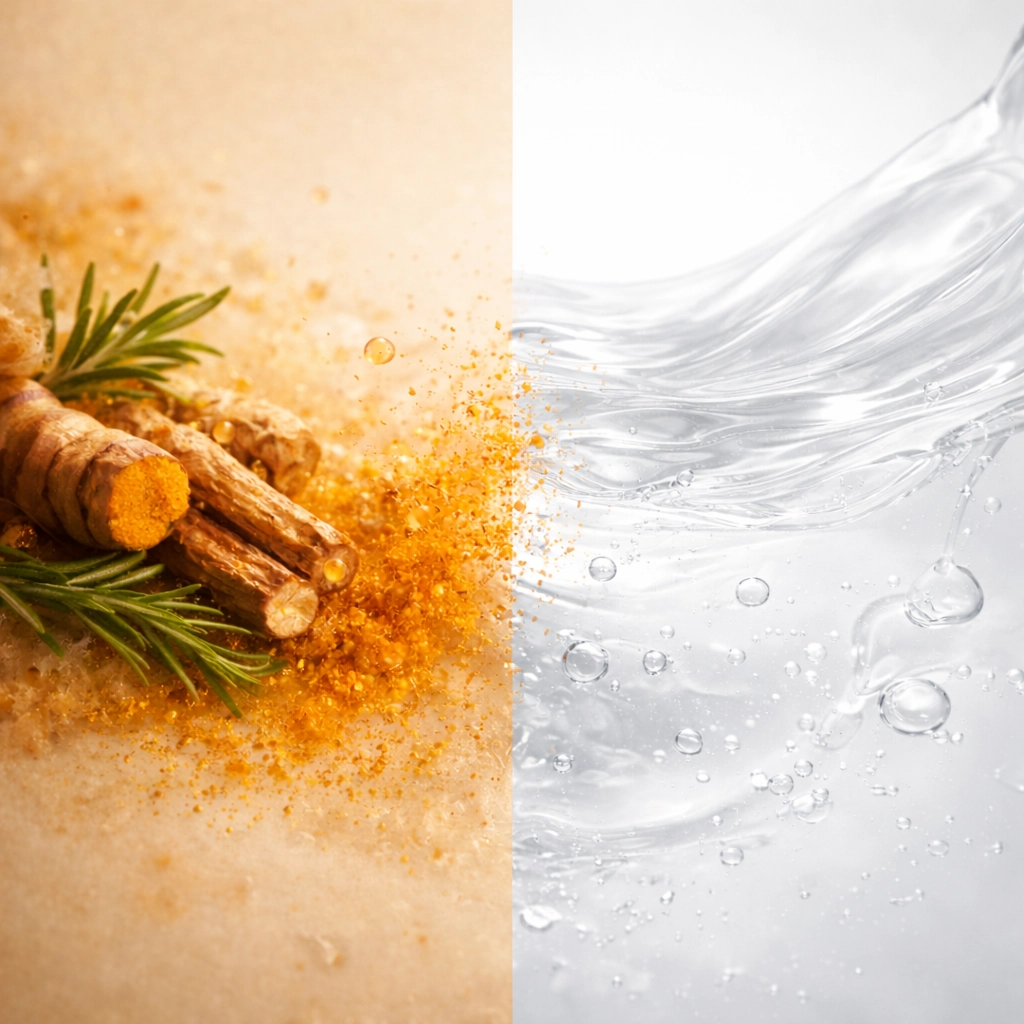
Two systems, different mechanisms, and how they support skin over time
Ayurveda, Modern Actives, and Functional Skin Support
Care systems are often divided into categories.
Natural or clinical. Traditional or modern. This distinction does not explain function.
Ayurveda and modern actives operate through different mechanisms.
Ayurvedic ingredients influence inflammatory response, reactivity patterns, and surface imbalance over time. Ingredients such as mulethi, Glycyrrhiza glabra, and oat, Avena sativa, support reactivity modulation and barrier calming. They do not act on a single pathway. They influence overall system stability.
Modern actives work through targeted pathways. Ceramides support lipid organisation. Peptides influence cellular signalling. Humectants regulate water balance.
Different mechanisms, different roles
- The difference is not origin. It is role.
- Botanical systems regulate baseline behaviour.
- Targeted actives correct structural requirements.
- One stabilises the system. The other depends on it.
Used independently, both have limits.
Botanical inputs do not correct structural gaps with precision. Targeted actives depend on the condition of the system they are applied to. The relationship is sequential. Not interchangeable.
Care, in this context, is not defined by ingredient source.
It is defined by functional role.
The distinction is not natural versus modern.
It is regulation versus intervention.
Age less. Care deeper.