
Cumulative structural change in canine and feline skin under repeated bathing and environmental exposure
The Forgotten Biology of Equine Care
Equine Skin Biology and Species-Specific Care
Horse skin is not dog skin.
Not thicker dog skin. Not a variation.
A different system entirely.
In equine care, this distinction is often overlooked.
Horse skin is thicker and denser, built for tension and movement. This reduces immediate reactivity, but does not reduce stress. It delays it.
Why equine skin behaves differently
- Horses regulate heat through sweat, not panting.
- Equine sweat contains proteins like latherin, which help it spread across the coat.
- Under friction, sweat forms foam and alters the skin’s surface environment, including pH and lipid balance.
- Sweat is not neutral.
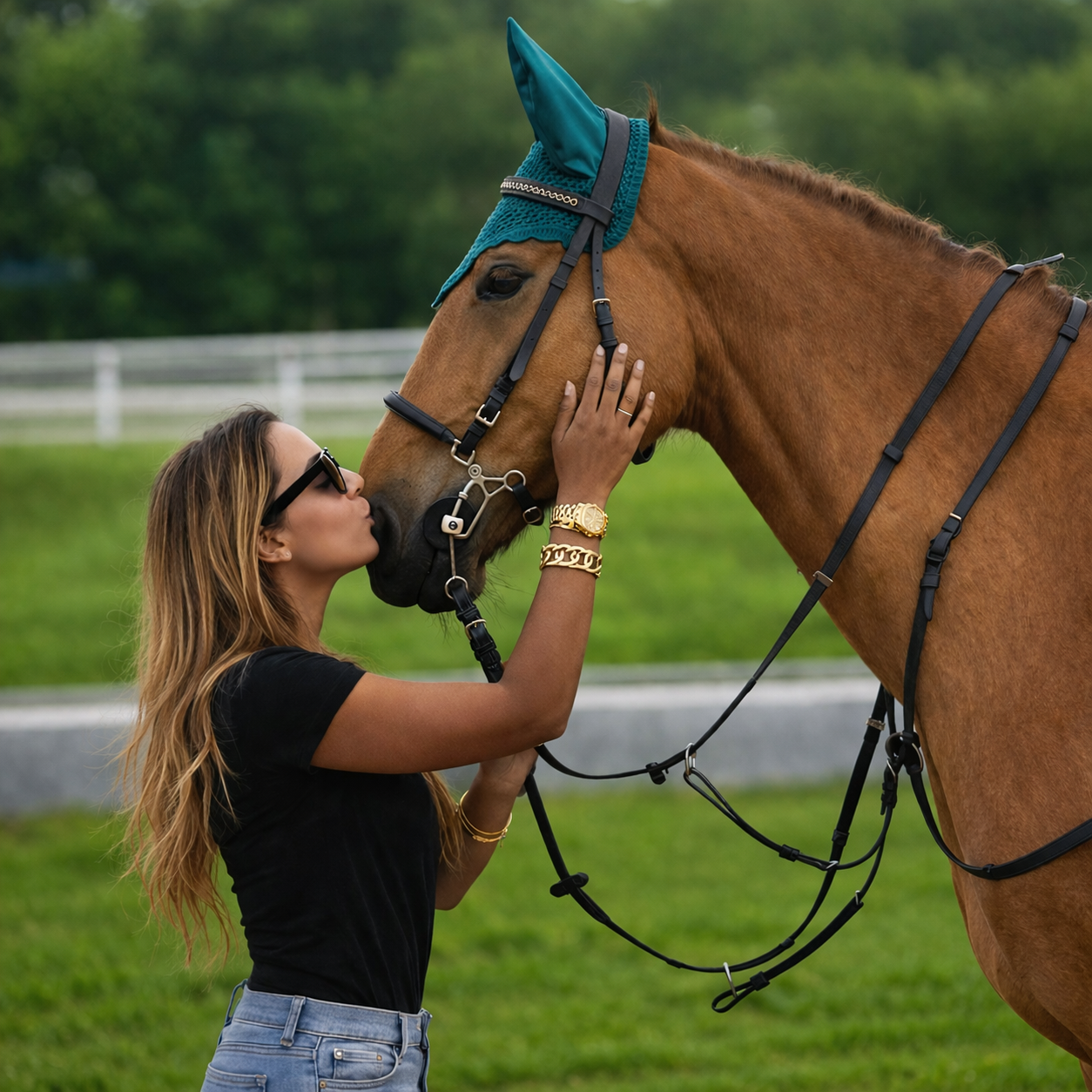
Friction is constant. Saddle, girth, and harness create repeated pressure across the withers, shoulders, girth line, and inner thighs. This introduces daily mechanical stress.
Exposure is continuous. Sun, dust, mud, humidity, and temperature shifts are part of the baseline environment. Stress is not occasional. It accumulates.
This is especially relevant in working and performance horses.
Sweat, saddle use, and environmental exposure are constant. In warm, high-humidity environments, this effect becomes more pronounced. These conditions do not resolve on their own. Ignoring these variables leads to inconsistent outcomes.
They require surface management that can adapt to circumstantial and environmental load without disrupting the skin barrier system further.
Occlusive or heavy formats can also interfere with these dynamics. Care that ignores mechanical stress and biological context becomes approximation.
Skin is species-specific. Care should be too.
Age less. Care deeper.