
How visible changes relate to ageing in pet skin
Visible Ageing Patterns in Pet Skin and Coat
Visible changes in pet skin and coat reflect reduced stability in moisture regulation, lipid organization, and surface balance over time.
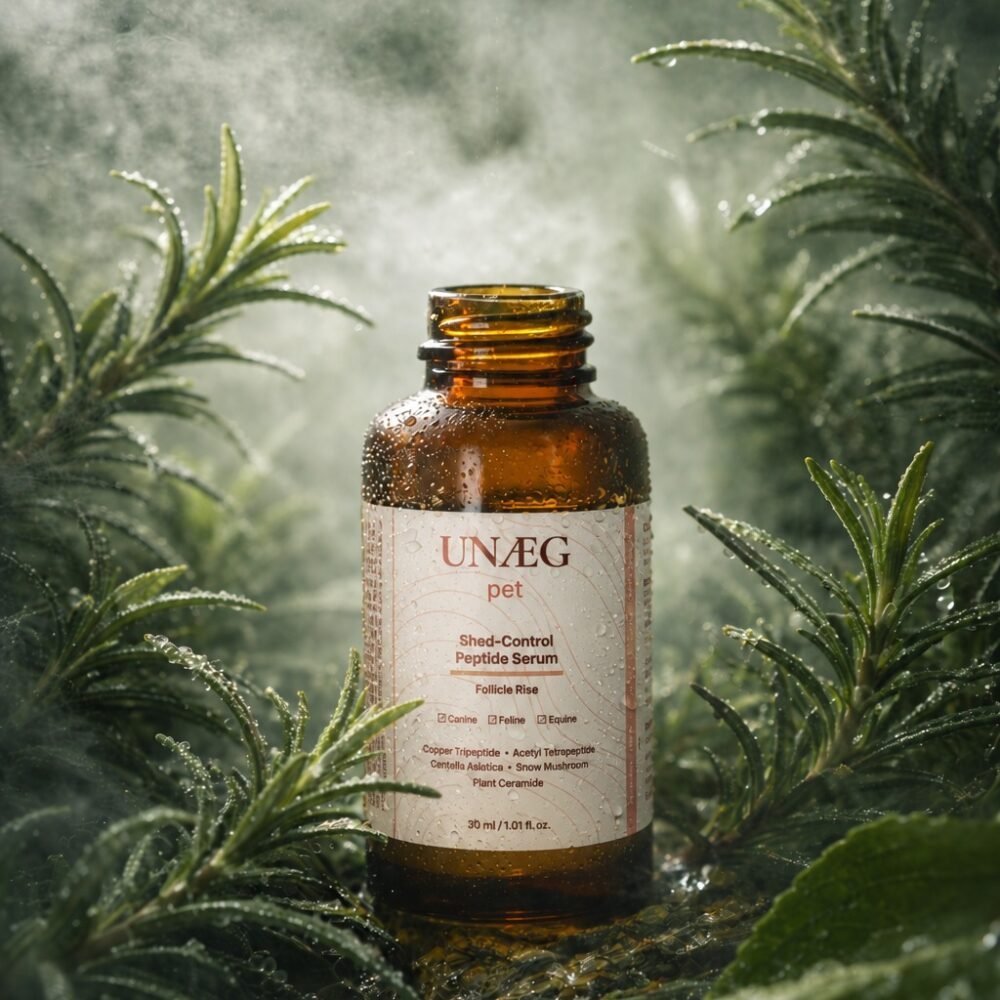
They develop gradually under repeated exposure and incomplete recovery.
Factors that influence visible change
- Frequent cleansing and disruption of surface lipids.
- Environmental heat and UV exposure.
- High humidity and moisture imbalance.
- Pollution and particulate load in urban environments.
- Friction from collars, harnesses, and contact surfaces.
- Indoor conditions with controlled air and limited ventilation.
- Natural ageing processes affecting renewal and barrier function.
Over time, cumulative load may reduce consistency in how the skin maintains balance.
The UNÆG Skin Atlas organises these patterns into distinct types observed under routine exposure and care.
The UNÆG Skin Atlas types
Type I — Flaky Dry Skin
- Dry snout.
- Flaky lips.
- Rough elbows.
- Dehydrated paw edges.
Indicates reduced surface moisture retention in exposed areas.
Type II — Surface-Dull Coat
- Reduced or flat shine.
- Rough surface texture.
- Coat appears dry despite grooming.
Indicates uneven surface lipid alignment affecting light reflection.
Type III — Thinning & Shedding Coat
- Visible thinning in specific areas.
- Slower regrowth appearance.
- Increased or uneven shedding.
Indicates changes in coat growth cycle consistency.
Type IV — Heat-Stressed Skin
- Redness after outdoor exposure.
- Pink or flushed belly areas.
- Sensitivity in exposed zones.
Indicates increased reactivity to environmental heat and sun exposure.
Type V — Ageing & Barrier-Thinning Skin
- Skin feels thinner to touch.
- Reduced elasticity.
- Persistent dryness.
Indicates reduced efficiency in barrier function and renewal over time.
Type VI — Humidity-Sensitive & Irritated Skin
- Redness in enclosed or moist areas.
- Discomfort under collars or folds.
- Damp or sticky paw zones.
Indicates variability in moisture regulation under humid conditions.
Type VII — Greasy / Sebaceous-Overactive Coat
- Oily or waxy feel.
- Clumped or heavy strands.
- Greasy tail base.
- Faster dirt accumulation.
Indicates imbalance in surface oil distribution.
Visible signs are not the beginning of the problem.
They mark the stage at which it becomes clearly observable. Each type corresponds to different functional requirements across layers. Support should be structured accordingly.
Age less. Care deeper.
Disclaimer: The UNÆG Pet Skin Atlas is a proprietary cosmetic categorization framework designed to guide grooming routines. It is not a diagnostic tool for veterinary medical conditions.